Who Pays for Loss & Damage? Beyond Adaptation Grants

Africa is being courted again. This time, the language is cleaner: energy transition, critical minerals, clean infrastructure, climate finance. The urgency is sharper, the timelines are shorter, and...

There is a sentence repeated in nearly every African energy policy document: “universal access by 2030.” It is optimistic, visionary and mathematically impossible. With just five years to go, Africa...
At the just-ended Africa Climate Summit in Addis Ababa, I found myself circling back to one persistent question: who really pays for loss and damage in Africa?
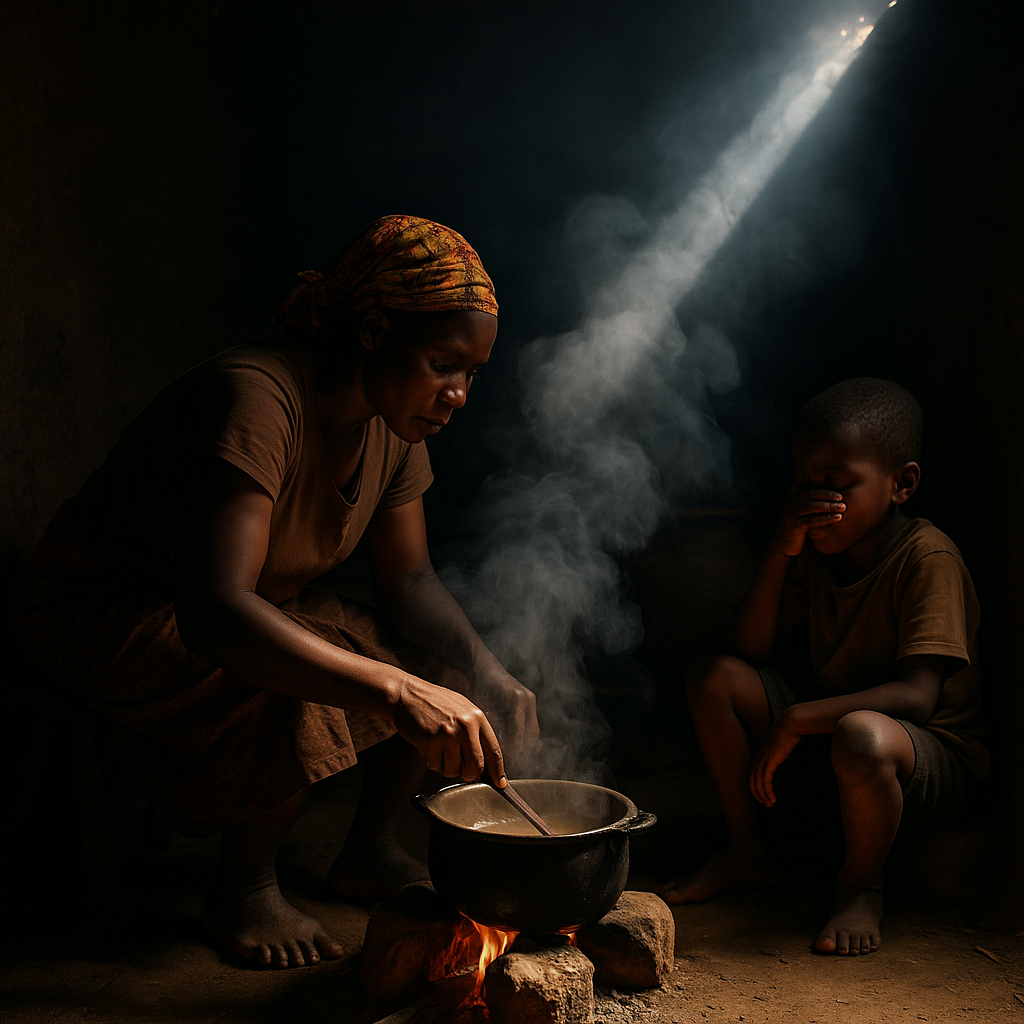
In side events and plenary sessions alike, leaders spoke of resilience, ambition, and the promise of new finance flows. Yet behind every declaration, I could hear the echoes of unmet promises. For communities already grappling with cyclones in Mozambique, floods in Nigeria, or drought in the Horn of Africa, loss and damage are a daily reality.
And the way finance flows today, they are the ones paying the price.
It is tempting to fold loss and damage into the broader adaptation agenda. But they are not the same. Adaptation is about preparing for future climate risks: building dams, planting drought-resistant crops, and upgrading early warning systems.
Loss and damage, however, refer to irreversible harm already suffered. Homes washed away. Farmland rendered infertile. Livelihoods lost to storms that cannot be adapted to. When a family in Malawi loses its only plot of land to flooding, there is no adaptation measure to restore it. That is loss.
Yet international finance frameworks continue to blur the two. Pledges often arrive as loans tagged for “resilience”, while true compensation for loss and damage remains elusive.
What struck me most during ACS2 was the mismatch between the urgency of loss and damage and the form of finance being proposed. According to the IMF (2025), 57% of Africa’s adaptation finance in 2024 was delivered as loans. If even adaptation finance is loan-heavy, what hope exists for loss and damage?
This is not just technical accounting, but rather an injustice. Asking countries already reeling from climate disasters to borrow for recovery is equivalent to making the victim pay for the crime. In 2024, Africa’s governments spent $163 billion servicing debt (Brookings), nearly three times the amount in 2010. Every repayment is money not spent on rebuilding homes, restoring farms, or protecting vulnerable communities.
When I heard pledges of $50 billion annually for climate solutions announced in Addis, I felt both relief and unease. Relief because the ambition is real. Unease because, unless these funds are grant-first and debt-free, we risk building climate resilience on the shaky foundation of more borrowing.
Numbers alone cannot capture the human cost. At one side event, a civil society leader from Mozambique described how her community is still recovering from Cyclone Idai, six years later. Homes have been rebuilt three times in the same floodplain. Children have missed years of schooling. Farmers have given up planting in soil that no longer yields.
“This is not adaptation,” she said quietly. “This is survival.”
Her words stayed with me. Loss and damage is not abstract policy category. It is families being forced to start from zero again and again, without any guarantee of support.
The Addis Ababa Declaration rightly placed adaptation and nature-based solutions at the centre of Africa’s climate leadership. But when it came to loss and damage, the commitments were thinner and less defined.
There was unity in demanding fairness. But the financing architecture was left vague. Would the promised $50 billion arrive as loans, guarantees, or direct grants? Would African institutions have direct access, or would money trickle through slow intermediaries like the Green Climate Fund? Without clarity, Africa risks leaving Addis with aspirations but not guarantees.
If Africa is to move beyond rhetoric, three shifts are non-negotiable:
These reforms are not radical; they are the bare minimum of justice.
As Africa prepares for COP30 in Brazil, I believe loss and damage must be Africa’s red line. Not an add-on, not buried under adaptation pledges, but a central demand: operationalise the Loss and Damage Fund with grant-first rules.
At ACS2, leaders called for unity. That unity must now extend into negotiations. Africa should arrive at COP30 with one voice: we will not finance our own destruction through debt.
As I left the summit hall in Addis, I thought of the Mozambican leader’s words: “This is survival.” For millions across Africa, climate change is already erasing homes, farms, and futures. Loans will not bring those back.
My conviction is simple: loss and damage must be paid by those responsible for the crisis, not those suffering from it.
That means predictable, grant-first finance. That means structural reforms to access. That means treating Africa’s climate losses not as charity cases but as justice owed.
And until the system shifts, the question I carried into Addis will remain: who really pays for loss and damage?
Contributor at Energy Transition Africa, focusing on the future of energy across the continent.
The International Energy Agency (IEA) has released its World Energy Outlook 2025. After reading it, I was struck by one figure: 1 billion Africans still cook with firewood, charcoal, and animal dung....