Responsible Minerals Finance: Bridging the Gap Between Theory and African Practice

For much of Africa, the diesel generator has become an unspoken pillar of the economy. It powers factories when the grid fails, keeps hospitals running during blackouts, and underwrites commercial...
For years, the global energy transition has been narrated as a linear story: renewables rise, fossil fuels fall, and gas fades as a temporary bridge. That story is now colliding with reality. In late...

Africa’s critical minerals are once again in the global spotlight, this time not for what’s being dug up, but for how it’s being financed.
Last week, the United Nations Environment Programme (UNEP) released a new report calling for responsible financing and investment in energy transition minerals, including copper, cobalt, lithium, manganese, and graphite, which power the world’s net-zero ambitions. The report urges governments, banks, and companies to establish a “nature-positive” mining economy that safeguards ecosystems and communities while driving the green transition.
On paper, this is progress. In practice, it reveals an uncomfortable gap between the theory of responsibility and the reality of African extraction.
The UNEP report arrives at a critical moment. Africa is central to the global mineral supply chain: the continent hosts around 30 % of the world’s known reserves of the critical minerals essential for renewable energy technologies. Yet African countries capture only a fraction of the value they generate.
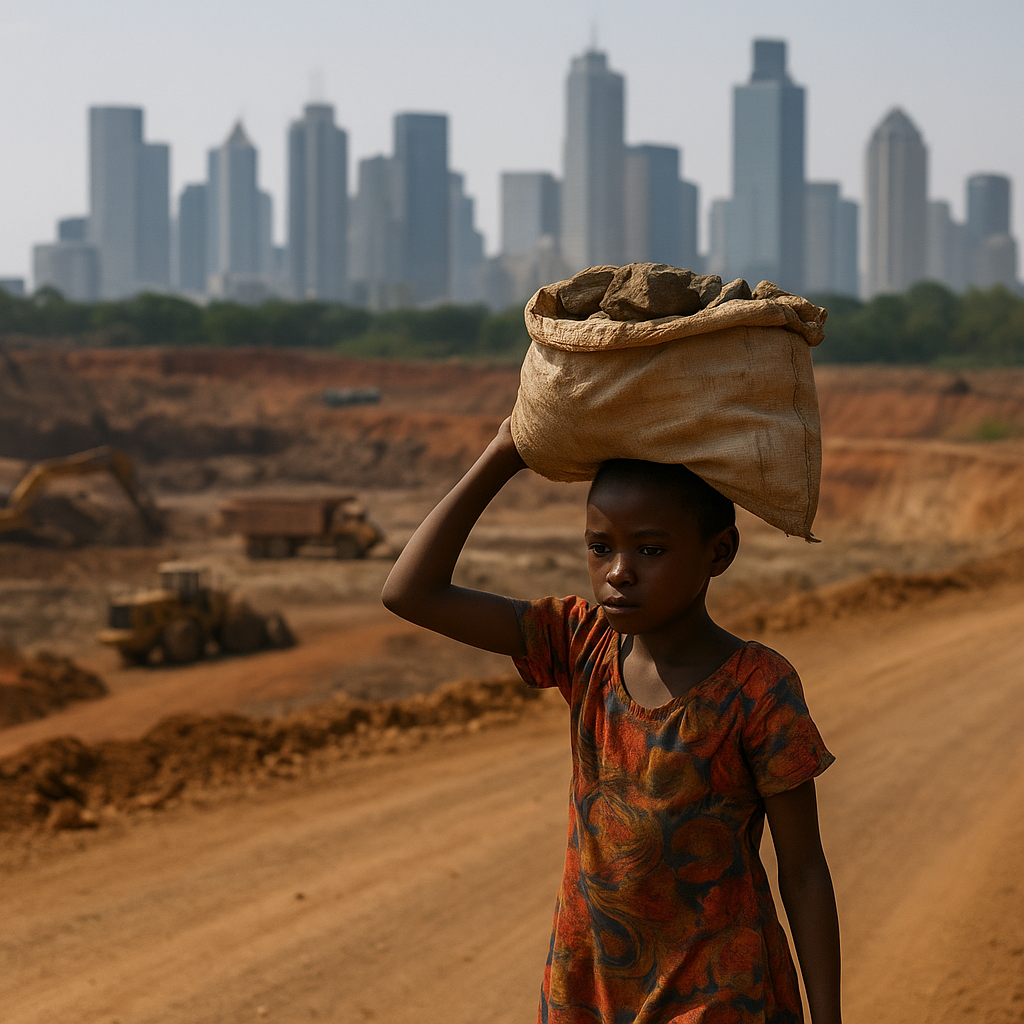
The contradiction is stark. The same minerals that underpin solar panels, electric vehicles, and wind turbines are often mined in conditions that replicate the very inequalities the energy transition claims to solve. In places like the Democratic Republic of Congo, cobalt mining has come to symbolise both opportunity and exploitation, a $13 billion industry where local communities see little benefit, and environmental oversight remains weak.
UNEP’s call for “responsible minerals finance” aims to close this gap by encouraging investors to embed environmental, social, and governance (ESG) standards in every stage of financing. But as African civil society has long warned, standards without structure are not enough. Most of Africa’s mines are financed in dollars, operated by foreign entities, and structured through offshore intermediaries that limit domestic tax collection.
Responsibility, without sovereignty, remains a fragile promise.
Across the continent, policymakers increasingly agree that Africa’s energy transition must not replicate the old extractivist model. The African Union’s Green Minerals Strategy calls for regional coordination, beneficiation, and stronger governance of cross-border mineral trade. But the practicalities of financing this ambition remain unresolved.
The UNEP report highlights the role of “blended finance”, combining public concessional funding with private capital, as a way to de-risk investments. This model has proven effective in renewable energy generation, but its extension to mining raises deeper concerns. When de-risking becomes synonymous with public subsidy, citizens often end up underwriting profits for multinational operators.
African negotiators at global climate and finance summits have repeatedly stressed that responsibility must mean redistribution. To be truly just, responsible finance should include provisions for local ownership, community equity, and revenue-sharing frameworks that transfer value, not just risk, to host countries.
A closer look at mineral financing flows reveals a structural imbalance. The majority of African critical mineral projects are funded by European, Chinese, or North American institutions. Domestic and regional banks remain largely absent from large-scale project financing due to limited balance sheets, high capital costs, and stringent risk-weighting rules.
This absence has consequences. It means that African governments have little say in how contracts are structured or monitored. It also reinforces dependency on foreign currency loans, which expose countries to exchange-rate shocks and external debt pressures, a problem that already plagues several resource-rich economies.
Building responsible finance, therefore, requires more than ESG metrics; it demands a re-architecture of Africa’s financial ecosystem. Regional development banks such as the African Development Bank (AfDB) and Afreximbank are well-placed to lead this shift by creating local-currency financing mechanisms tied to sustainability standards.
Such instruments could not only lower financing costs but also align financial accountability with local realities, where communities, not distant boards, feel the impact of extraction.
UNEP’s framework emphasises transparency and traceability, yet it leaves critical questions unanswered. Who defines what is “responsible”? And who holds financiers accountable when harm occurs?
The experience of African governments with international mining codes offers cautionary lessons. Previous “responsible mining” initiatives, from the OECD Due Diligence Guidance to the Global Battery Alliance, were designed with noble intent but limited enforcement power. They improved reporting but not redistribution.
In the absence of binding financial accountability, responsible finance risks becoming another chapter in the book of well-meaning rhetoric. As one Congolese activist once told us, “We are tired of being studied responsibly while remaining poor responsibly.”
The next phase of Africa’s minerals story must therefore move beyond compliance checklists. It must redefine responsibility as ownership, accountability, and agency.
Several countries are already testing new models.
These experiments reflect a growing consensus: Africa must not only mine minerals but also monetise them equitably. The challenge is ensuring that new forms of partnership, particularly those framed under the “just transition” banner, deliver long-term benefits rather than short-term foreign earnings.
In this context, UNEP’s report could serve as a guiding reference, but it will only be meaningful if it catalyses African-led financing mechanisms that embody its principles.
If Africa is to lead in responsible minerals finance, three strategic priorities stand out:
These steps would turn “responsibility” into a measurable, enforceable principle, one defined by Africans, for Africa.
As global capital races to secure minerals for the energy transition, the continent faces a defining question: will it be the site of responsible extraction or the architect of responsible transformation?
That choice will determine whether the next decade of mining repeats history or rewrites it.
Contributor at Energy Transition Africa, focusing on the future of energy across the continent.
In parts of Africa, railways are being rehabilitated, ports are expanding, power lines are stretching across borders, and industrial corridors, once stalled by finance and politics, are re-entering...