Africa’s Climate Finance Pivot: The Rise of National Funds in a Post-Pledge World

For much of Africa, the diesel generator has become an unspoken pillar of the economy. It powers factories when the grid fails, keeps hospitals running during blackouts, and underwrites commercial...
For years, the global energy transition has been narrated as a linear story: renewables rise, fossil fuels fall, and gas fades as a temporary bridge. That story is now colliding with reality. In late...
For more than a decade, Africa’s climate transition has rested on a delicate fiction: that global climate finance, however slow and insufficient, would eventually scale up. Pledges would harden into predictable pipelines, multilateral funds would become the backbone of energy planning, and concessional money would arrive early enough to de-risk grids, catalyse private capital, and smooth the political pain of reform.
That fiction is fraying. Across the continent, a new model is emerging that is less dependent on UN-era promises and more shaped by domestic mobilisation and bespoke deal-making. Governments are launching national climate funds, investment platforms, and blended-finance vehicles designed to pool public resources, attract institutional capital, and negotiate partnerships from a stronger position.
And this is a strategic move. Africa’s climate finance is shifting from expectation to agency because the global architecture intended to finance the transition has become less reliable, more politicised, and more fragmented.
Multilateral climate finance was never a flood, but it offered something crucial, which is predictability. Under the UN climate system, there was at least a shared grammar of responsibility, reporting, and collective effort. Countries could plan around the idea, sometimes more hope than fact, that concessional flows would grow over time.
The reality today is harsher. Donor politics have hardened. Geopolitical competition is reshaping development priorities, and finance is increasingly channelled through bilateral agreements, export-credit agencies, and strategic “partnerships” that look less like solidarity and more like statecraft.
For African planners, this matters more than the headline numbers. Electricity systems are not built on press releases; they are built on long-term capital structures, tariff reforms, procurement discipline, and credible pipelines. When external finance becomes unpredictable, the entire planning logic changes.
The result is not the disappearance of climate finance, but its recomposition towards instruments that are faster, more conditional, and often more debt-like.
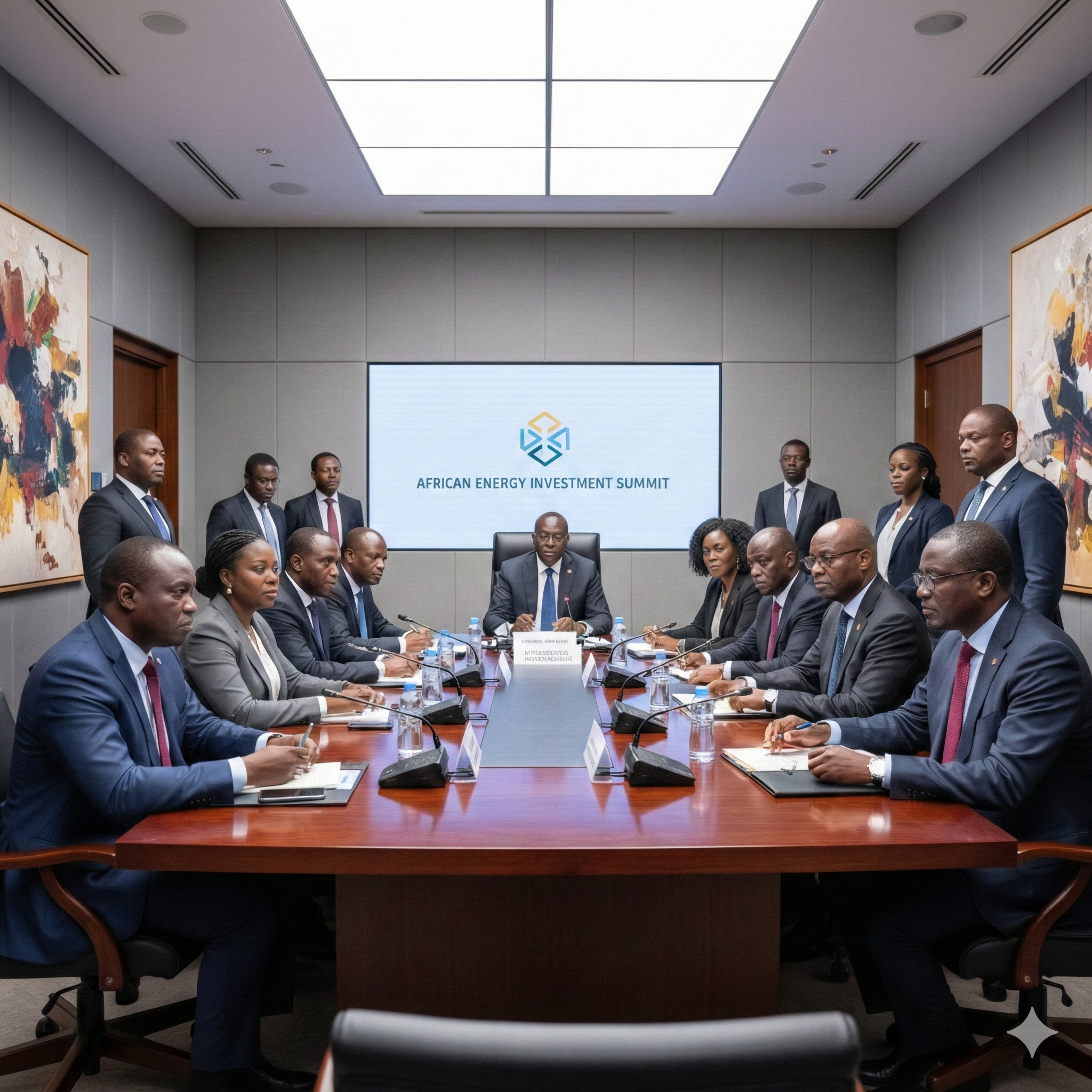
Nigeria has provided one of the clearest recent signals of this pivot. Speaking at Abu Dhabi Sustainability Week, President Bola Tinubu announced a $2 billion capitalisation target for a National Climate Change Fund, alongside a Climate Investment Platform targeting $500 million to finance climate-resilient infrastructure. He also pointed to strong demand for green bonds, including oversubscription in recent issuances, and described an effort to mobilise $25–$30 billion annually in climate finance over time.
This isn't merely a funding headline, but it reflects a strategic shift in posture:
Nigeria’s move isn't perfect proof of success. But it is a clear statement of direction: national capital structures are becoming the organising unit of climate finance, especially where multilateral confidence is weakening.
In a post-pledge world, the countries that build platforms will outpace the countries that wait for promises
If Nigeria illustrates the pivot towards domestic mobilisation, Ghana illustrates the condition for making it work: credibility in the underlying power sector.
In mid-January, Ghana’s finance ministry said the government cleared $1.47 billion in legacy energy sector debts during 2025, settling arrears to gas suppliers and independent power producers and restoring a depleted World Bank partial risk guarantee. Reuters reported that the guarantee had been depleted, jeopardising billions in private investment, and that payments included significant amounts to the World Bank and to counterparties under gas and power arrangements.
This is a warning about what climate finance fragmentation does to countries with weak utility finances:
Ghana’s clearing of arrears is therefore best read as a form of climate finance strategy even if it is not branded that way. It is the work of rebuilding investability: restoring confidence that power-sector cashflows and obligations will be honoured.
Climate finance doesn't only follow vulnerability. It follows credibility especially when money becomes scarce.
Egypt offers a third, complementary example: the use of large bankable projects and industrial adjacency to pull investment into the transition.
Reuters reported that Egypt signed renewable energy agreements worth $1.8 billion, including a major solar-and-storage build by Scatec in Minya (1.7 GW of solar plus 4 GWh of battery storage) and a battery manufacturing facility by Sungrow in the Suez Canal Economic Zone.
This matters for Africa’s finance pivot because it illustrates how national strategy can shape financing outcomes:
Egypt’s approach is not without controversy or risk. But it reflects a reality of fragmented finance: large deals that align investor returns with national priorities move faster than multilateral pipelines.
Across these examples, the logic is consistent. National climate funds and platforms are rising for four reasons.
UN-era pledges may still exist, but their credibility as planning anchors is weaker. Governments are responding by creating domestic vehicles that can operate even when external flows arrive late or unevenly.
A growing share of “climate” money now sits inside industrial policy, trade strategy, and geopolitical positioning. National platforms allow African states to negotiate within this reality rather than pretending it does not exist.
Africa’s binding constraints are grids, distribution, and institutional execution. Funds that can finance system delivery, rather than only megawatt sare becoming more valuable than headline pledges.
Pension funds, local banks, sovereign vehicles, and regional markets are increasingly the foundation of transition finance. While external funding becomes catalytic, not primary.
There is, however, a central risk in the national-funds pivot: bad governance and bad debt.
A national climate fund that becomes:
will not restore agency; instead, it will institutionalise disappointment. And this is where Africa’s pivot must mature from announcement to architecture. The test is not whether a fund is created, but whether it is governed credibly and linked to a delivery plan.
Three priorities separate national funds that attract capital from those that merely exist.
Africa’s climate finance pivot is not an ideological project. It is an adaptation to a world in which multilateral promise is weaker, and climate finance is more political.
Nigeria’s national fund ambition, Ghana’s credibility repair, and Egypt’s bankable deal-making point to a single lesson: the centre of gravity is shifting from pledges to platforms.
The countries that will win in this landscape are not necessarily the most vulnerable or the most eloquent at summits. They will be those who convert transition ambition into investable systems, backed by governance, pipelines, and domestic capital.
In a post-pledge world, agency isn't declared; it is built.
Contributor at Energy Transition Africa, focusing on the future of energy across the continent.
In parts of Africa, railways are being rehabilitated, ports are expanding, power lines are stretching across borders, and industrial corridors, once stalled by finance and politics, are re-entering...