Can Africa Really Lead the Global Battery Race? Here’s What It Will Take

For much of Africa, the diesel generator has become an unspoken pillar of the economy. It powers factories when the grid fails, keeps hospitals running during blackouts, and underwrites commercial...
For years, the global energy transition has been narrated as a linear story: renewables rise, fossil fuels fall, and gas fades as a temporary bridge. That story is now colliding with reality. In late...
For years, Africa has been described as a continent rich in minerals but poor in manufacturing. A place where the world mines, ships and profits, while local communities wait for trickle-down development that rarely arrives. But in the past 24 months, something unusual has happened: global powers are no longer looking to Africa only as a source of raw materials, they are looking at Africa as a potential battery power.
The question that once sounded unrealistic: Can Africa play a central role in the global battery industry? Now carries strategic urgency.
The world’s clean-energy transition is accelerating faster than predicted. Electric vehicle (EV) sales continue to rise, battery storage is becoming essential to grid stability, and geopolitical competition over supply chains is reshaping global alliances. To build a single battery, manufacturers require cobalt, lithium, manganese, graphite, nickel and copper, minerals Africa holds in vast quantities.
But minerals alone do not create industries.
Manufacturing does.
Policy does.
Power reliability does.
Skills do.
And the uncomfortable truth is this: Africa will not lead the global battery race simply because it owns the minerals. Africa will lead only if it builds the factories, talent, logistics and governance structures that turn minerals into products.
The world is moving quickly. Africa must decide whether it will follow, participate, or lead.
The global battery supply chain is undergoing profound realignment. Three forces are driving this shift:
This is creating a rare window of opportunity:
A moment when the world is not just willing but eager to diversify supply chains away from single-country dependence.
Africa, with its mineral wealth and renewable-energy potential, is now part of the global conversation in a way it has never been.
But opportunity does not automatically become advantage. It must be seized.
Africa holds:
This mineral foundation gives Africa undeniable strategic relevance.
Batteries are energy-intensive to produce.
Africa has some of the world’s cheapest solar potential, a major competitive edge for green-powered manufacturing.
Unlike 20 years ago, African governments are now actively pursuing industrial value chains, from Morocco’s automotive platform to South Africa’s green-hydrogen strategy and the DRC–Zambia battery initiative.
The foundations exist. But foundations alone do not build an industry.
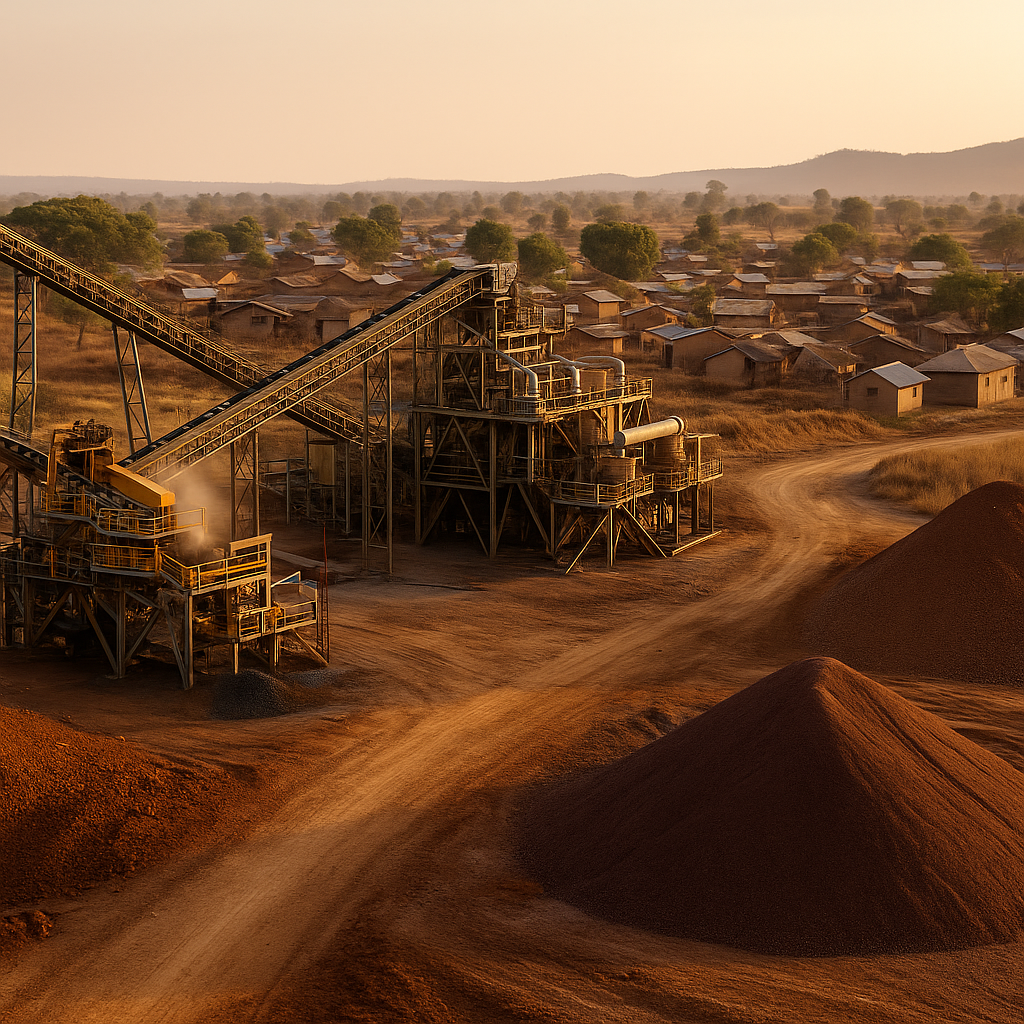
Most African minerals leave the continent in raw or semi-processed form.
Yet the real value sits in mid-stream processing:
Without these steps, Africa remains trapped at the low end of global value chains.
Battery factories cannot operate with power cuts.
Unreliable electricity is one of the biggest threats to African industrialisation.
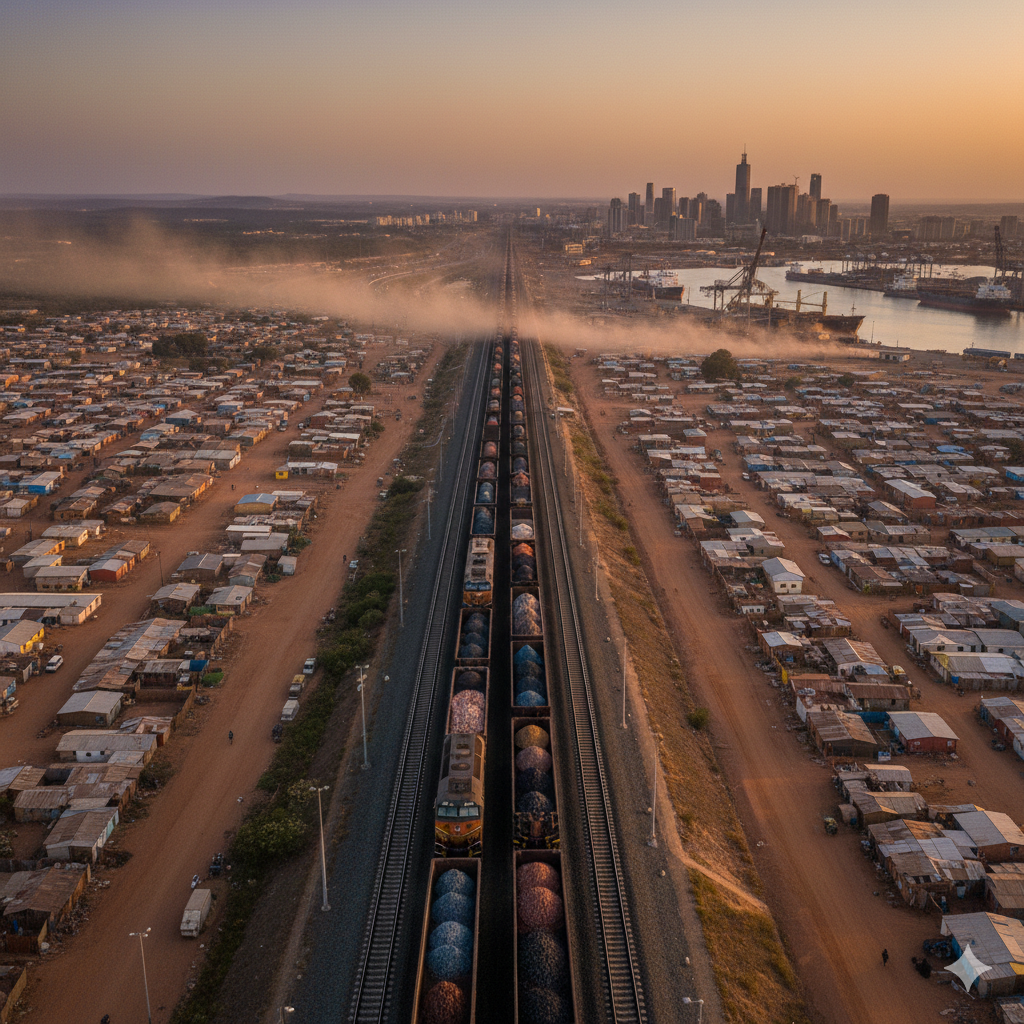
Ports, rail networks, container capacity and customs efficiency determine whether Africa’s products can compete globally.
A battery supply chain cannot thrive in siloed national systems.
It requires cross-border logistics and harmonised regulations.
Africa needs:
The youth population is large, but training pipelines are not.
Morocco is demonstrating what industrial ambition looks like.
Morocco is becoming Africa’s clearest example that a battery economy is possible, not theoretical.
South Africa is investing in:
If power reliability improves, South Africa could anchor the southern value chain.
This cross-border partnership aims to create a shared manufacturing corridor. It aligns mineral supply (DRC cobalt + Zambia copper) with industrial processing.
It remains early, but it is strategically promising.
There is no path for Africa to immediately dominate cell manufacturing at the scale of China.
But leadership does not require dominance; it requires specialisation, cooperation and consistency.
Below is a realistic roadmap.
Africa must avoid unrealistic ambitions. The continent is not ready to dominate every stage of battery production, but it can lead in several.
High-potential segments include:
These segments play to Africa’s strengths: minerals, labour costs, renewable energy and regional markets.
No single African country can build a full battery supply chain.
But regional blocs can.
Imagine:
Regional integration is Africa’s strongest strategic lever.
Battery plants need uninterrupted power.
Countries must invest in:
A battery plant cannot run on diesel generators.
This is Africa’s weakest link: inconsistent policies, sudden regulatory changes, and unclear incentives.
What investors need:
Industrial policy must survive elections.
Africa cannot build a battery industry without investing in people.
The continent needs:
Skills are the engine of industrialisation.
As global consumers demand clean, ethical minerals:
…will become a major competitive advantage. Africa can lead not only in minerals, but in ethical, just and sustainable minerals.
Yes, but only in the parts of the race Africa chooses strategically.
Africa can lead in:
And Africa can become indispensable in:
But this leadership is not guaranteed.
It is a choice, and it requires courage, coordination and clarity.
The world needs what Africa has.
The question is whether Africa will also build what the world needs next.
If Africa chooses industry over extraction, value over volatility, and strategy over salvage economics, then the battery race may become the first global industrial revolution Africa helps lead.
Contributor at Energy Transition Africa, focusing on the future of energy across the continent.
In parts of Africa, railways are being rehabilitated, ports are expanding, power lines are stretching across borders, and industrial corridors, once stalled by finance and politics, are re-entering...